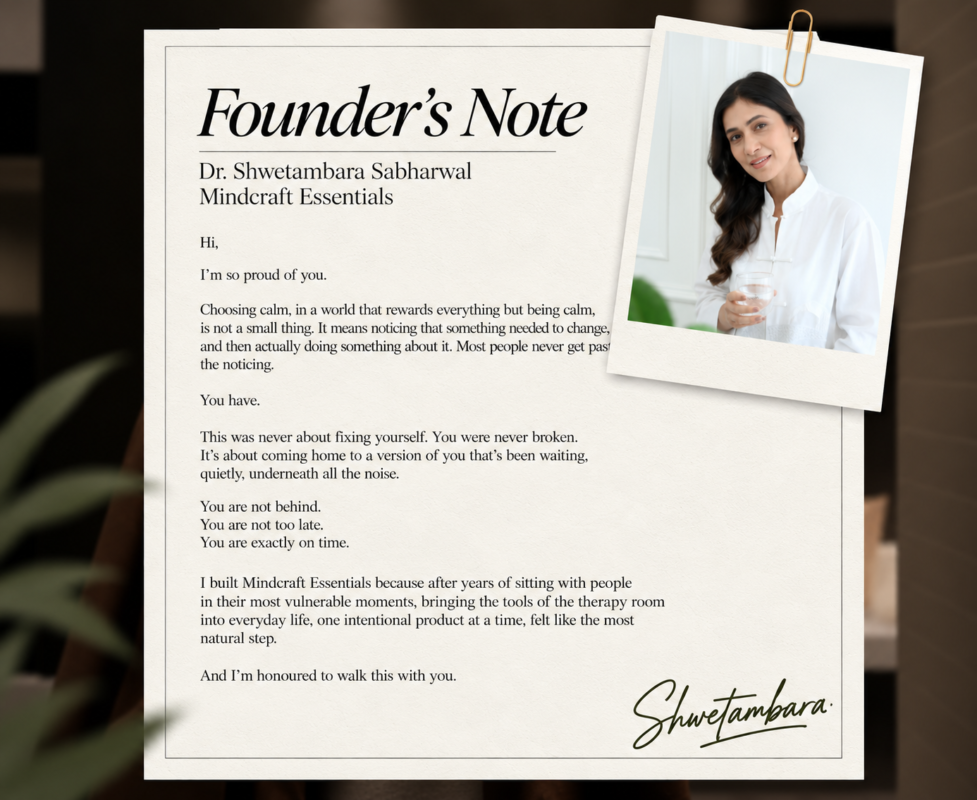
I'm Dr. Shwetambara Sabharwal, a psychologist, psychotherapist and mental health advocate with over 20 years of experience. I'm the founder of Mindcraft Counselling Centre, India's first ISO-certified multi-speciality centre for psychological testing and interventions.
The idea for Mindcraft began soon after I started as a clinical psychologist in 2004.
In mental healthcare, stigma and lack of awareness were only part of the problem. Finding the right care was often just as difficult. I saw families come in for a child's psychological evaluation, only to realise the child also needed occupational or speech therapy, while another family member needed counselling. Instead of being able to calmly understand what support their loved one needed next... families were left searching for specialists, deciding whom to trust and coordinating care, during an already overwhelming time.
I kept thinking: why should families have to coordinate all of this themselves? And my very nature is such that whenever I encounter a problem, I instinctively look for a better solution.
That led to the inception of Mindcraft Counselling Centre. My goal was simple: to bring mental health professionals across specialities together, so clients could access care in one trusted space. The idea was to reduce delays and emotional burden, improve coordination between professionals, and help people receive the right support without having to navigate the system alone.
Today, that philosophy continues to define Mindcraft.
After working with thousands of clients, I learnt one thing clearly: healing is deeply personal. While one person may prefer movement, another may choose creativity, mindfulness or spirituality. No single approach works for everyone.
I never wanted someone to miss out on the care they deserved because one approach did not work for them. I wanted Mindcraft to become a space where people could find the path to healing that suited them best.
That thinking expanded Mindcraft into an integrative wellness ecosystem, bringing mind, body and soul into the same approach to wellbeing.
The third turning point came from something my clients repeatedly told me.
Therapy was helping. People had greater awareness, clarity and tools they could use. But once work, responsibilities and everyday life resumed, self-work was often pushed into the background. They found it tough to remember and apply those tools when they needed them most.
I realised people needed simple ways to carry mindfulness into everyday life, beyond the therapy room.
The answer came in the form of Mindcraft Essentials: products designed as sensory anchors - touch, visual cues and calming rituals. Each one serves as a reminder to pause, regulate and reconnect, because healing grows through repetition and daily practice.
And over the years, I have realised that every time we solve one challenge, another need quietly reveals itself. I have always found it difficult to simply leave that need unanswered. That is where the idea of bringing trusted wellness support together in one accessible space began.
It became the birthplace of our next chapter: India's first mindfulness e-marketplace, bringing together products, services, events and retreats that are 100% therapist-approved.
When I look back, every chapter of Mindcraft has grown from the same instinct. Listening closely to people's needs, anticipating what they need next, and finding thoughtful ways to respond.
That continues to guide us today, as we build a holistic ecosystem where healing is compassionate, accessible, integrative and practical, and above all, a part of everyday life.
 Proud to be Made in India
.
Proud to be Made in India
.
 Therapist Approved
.
Therapist Approved
.
 India’s 1st mindfulness e-market
.
India’s 1st mindfulness e-market
.